Limited Edition Hawking
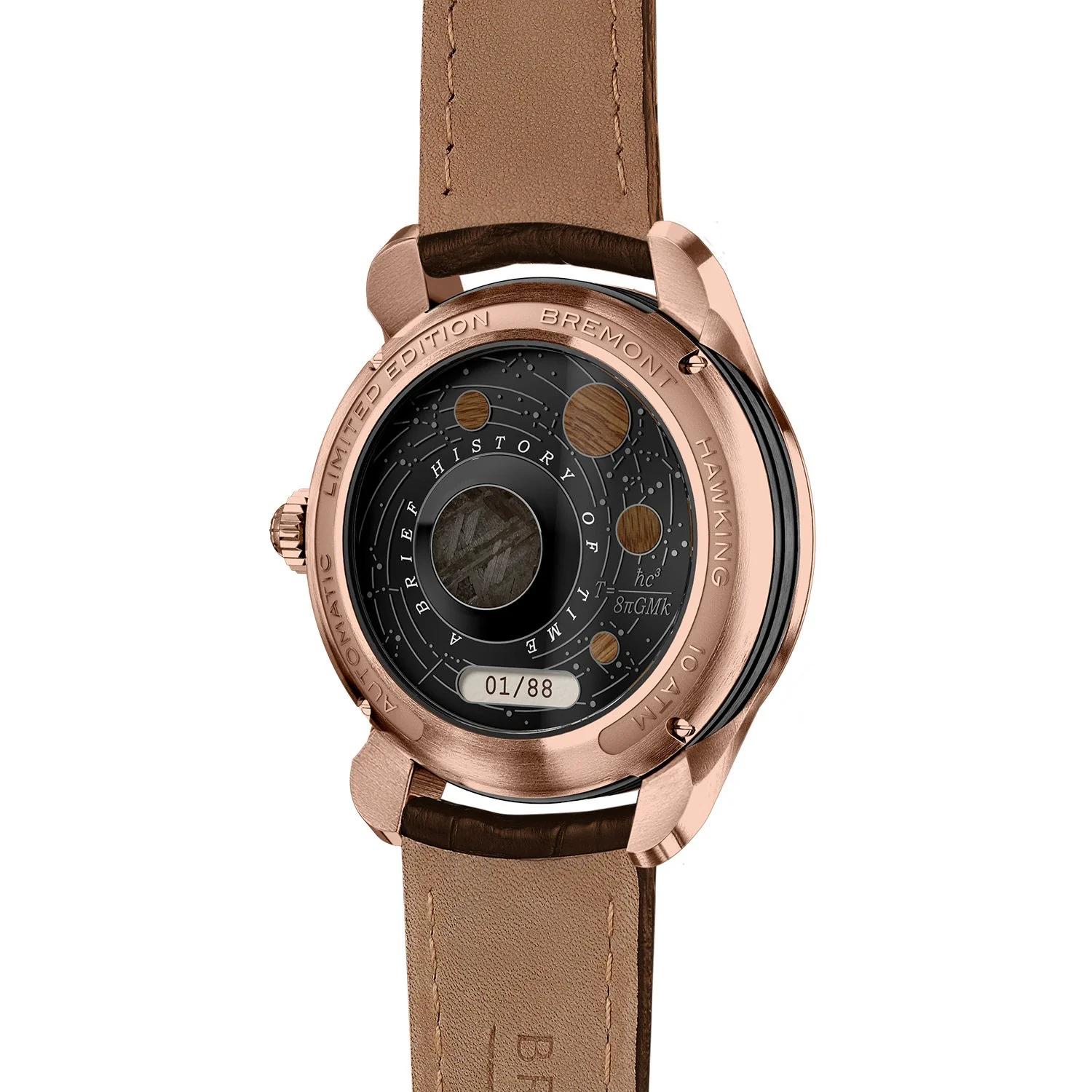
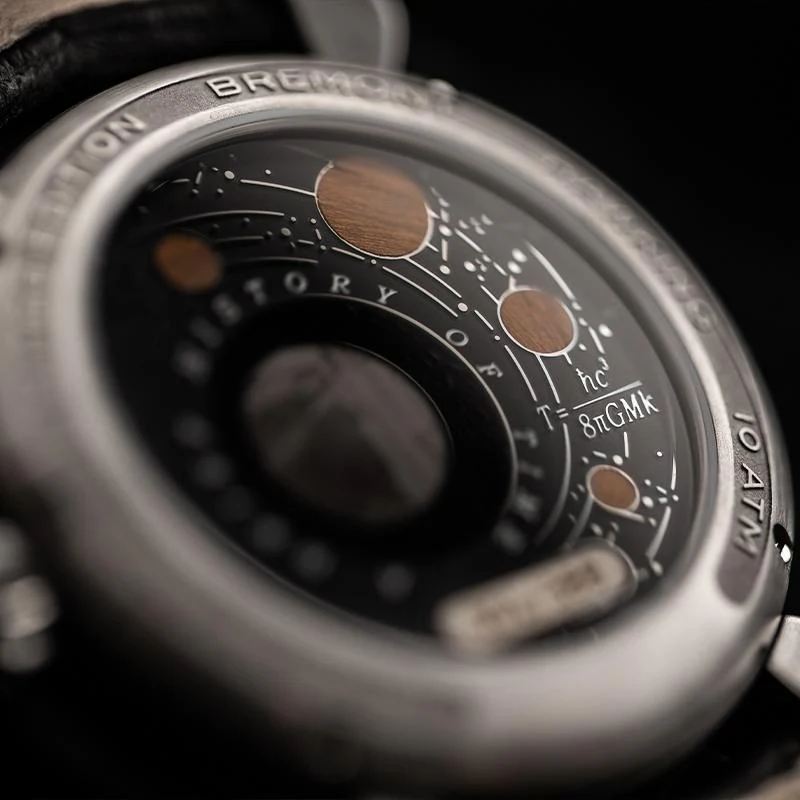
The classically styled Bremont Hawking Rose Gold Hawking features a retrograde seconds hand and grand date, contains 4 wooden discs inlaid into the back of the watch taken from the desk at which Hawking contemplated the mysteries of the universe. This exquisite chronometer also contains some meteorite to symbolise the cosmos displayed at the centre of the striking hand-finished case back, as well as an etching of stars from the night sky in Oxford on date that Hawking was born. The serial number is printed on paper from original copies of a 1979 seminal research paper commonly referred to as “The ‘nuts’ and ‘bolts’ of gravity”.
Product Information
Product Information
Shipping & Returns
Shipping & Returns





Limited Edition Hawking
Limited Edition Hawking
The classically styled Bremont Hawking Rose Gold Hawking features a retrograde seconds hand and grand date, contains 4 wooden discs inlaid into the back of the watch taken from the desk at which Hawking contemplated the mysteries of the universe. This exquisite chronometer also contains some meteorite to symbolise the cosmos displayed at the centre of the striking hand-finished case back, as well as an etching of stars from the night sky in Oxford on date that Hawking was born. The serial number is printed on paper from original copies of a 1979 seminal research paper commonly referred to as “The ‘nuts’ and ‘bolts’ of gravity”.
Original: $22,495.00
-70%$22,495.00
$6,748.50Product Information
Product Information
Shipping & Returns
Shipping & Returns
Description
The classically styled Bremont Hawking Rose Gold Hawking features a retrograde seconds hand and grand date, contains 4 wooden discs inlaid into the back of the watch taken from the desk at which Hawking contemplated the mysteries of the universe. This exquisite chronometer also contains some meteorite to symbolise the cosmos displayed at the centre of the striking hand-finished case back, as well as an etching of stars from the night sky in Oxford on date that Hawking was born. The serial number is printed on paper from original copies of a 1979 seminal research paper commonly referred to as “The ‘nuts’ and ‘bolts’ of gravity”.

